As super typhoon Karding lashed Central Luzon on September 25, 2022, “Sierra Madre” along with the hashtag #SaveSierraMadre were among the trending topics on social media. The mountain range has once again shown just how crucial it is in protecting the north-eastern part of the country against extreme weather disturbances. It was also in time for Save Sierra Madre Day (every September 26th by virtue of Presidential Proclamation No. 413) which commemorates the day in 2009 when Typhoon Ondoy dumped heavy rains and massive flooding in Metro Manila causing massive destruction of properties and casualties. The disaster was attributed to the continued deforestation, degradation, and destruction of the Sierra Madre mountains.
The Sierra Madre Mountains truly have incomparable importance. According to the Philippines’ Climate Change Commission (CCC), the Sierra Madre mountain range also plays a particularly significant role in Metro Manila’s major water supply demands, along with the provinces of Cagayan, Isabela, Nueva Vizcaya, Nueva Ecija, Quirino, Aurora, Quezon, Rizal, Laguna, and Bulacan.
Partnerships for Sierra Madre
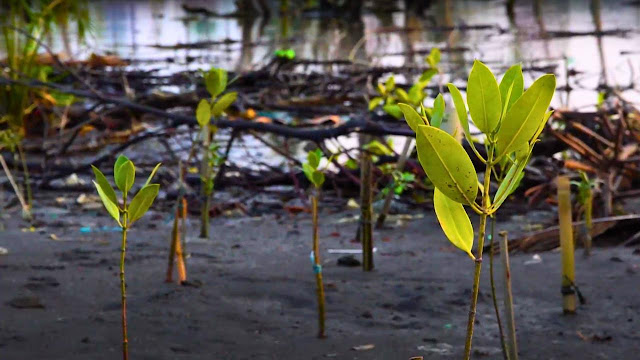
As its response to the need for continuously building awareness and to actively participate in the rehabilitation, reforestation, protection, and conservation of the Sierra Madre mountains, One Meralco Foundation implemented its One For Trees program in the Laguna-Quezon Land Grant area in partnership with Fostering Education and Environmental Development (FEED) and the University of the Philippines, Los Baños (UPLB). The initiative also hopes to contribute to the land’s bid to achieve a Forestry Stewardship Council (FSC) certification and develop the area as a sustainable forest and a major biodiversity hub.
One Meralco Foundation Program Manager for One For Trees, Patrick Famisaran, explained why activities like tree planting will eventually help the next generation, “Last month as Sierra Madre protected us from the wrath of Typhoon Karding we had a reality check on how our mountains and trees have become our allies for survival and that exactly is the point of One For Trees. Overtime, reforestation enriches the biodiversity of the area which will sustain ecosystems here including our own survival.”
FEED and UPLB have been working closely in the Laguna – Quezon Land Grant since 2011 through a community based social forestry approach. Based on their SEEDS4FEEDS program, FEED will implement OFT through working with the local community who will carry out efforts in site preparation, nursery establishment, and planting, nurturing, protecting, and monitoring of trees. OFT funded 100,000 trees which shall cover 40 hectares of reforestation involving 150 farmers from different people’s organizations (POs). This will result in additional economic gains for the local farmers and enhance agroforestry-based opportunities over the long term.
“FEED has been planting here since the 1980’s during the time when the Navy, Army, and Marines were the only ones allowed in the Sierra Madre. But overtime, when CSR (Corporate Social Responsibility) became something in the 1990’s, instead of us looking for companies, they started coming to us. We realized that the demand was getting bigger and bigger, and we had to expand our programs," said FEED Director of Partnerships Anne Marie Bakker.
Indeed, one of the most important ingredients of a reforestation program is the people behind the trees who continue to manage them long after tree planting volunteers plant them. In turn, programs like One For Trees also provides economic sustainability for these tree farmers and forest rangers as they get employed and can earn out of the agroforestry component of the program.
The planting activity also highlighted the vital role tree farmers play in the sustainability of the program. “We often remind our participants that when we plant trees, the site has been prepared by the forest guards. But hopefully you can also experience a little bit of the hardships of a forester, our farmers, and our fishers. They are the poorest of the poor in this country, I would say they are frontliners of the Philippines. They protect our water and our food supply, and yet they are the most marginalized, so please remember to thank them,” Bakker reiterated.
Fostering deeper awareness and commitment
OFT also advocates for social commitment by deepening the awareness of the public on the importance of reforestation, regeneration, and the preservation of our country’s forests. One concrete example is by engaging employee volunteers in community planting where they can appreciate more the significance of long-term reforestation undertakings to community welfare as well as nature’s impact to individuals.
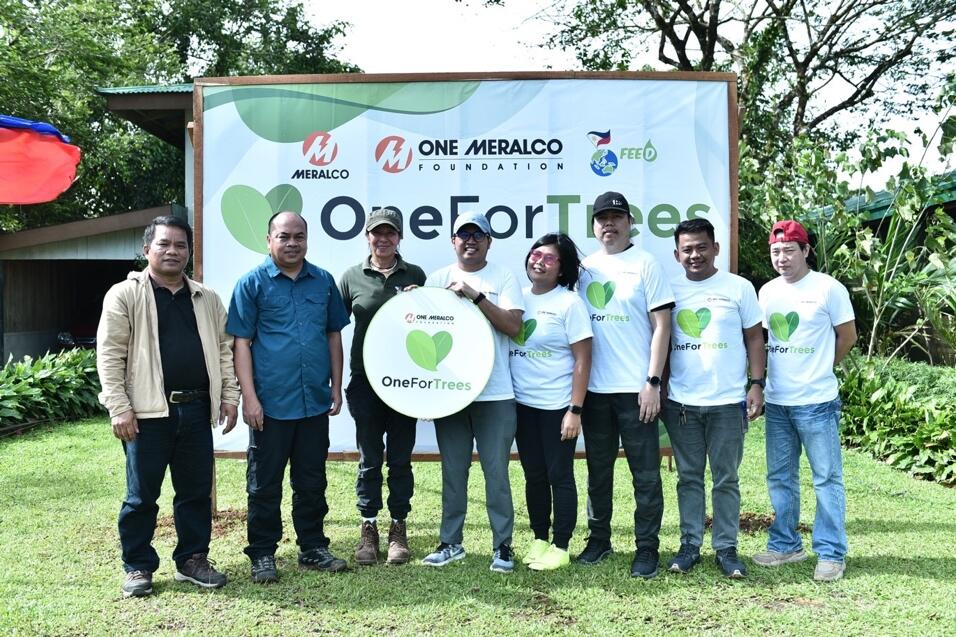
Meralco employees from its South Business Area and South Sector volunteered during the kick-off where they learned proper seedling preparation for actual out planting. Employees planted native tree species like lanite, gakakan, kublii, malaruhat, malasantol, langka and malabayabas.
Away from the usual office routine, Meralco employee volunteers were able to be one with nature through this activity. Meralco Lucena Business Center Head Yvonne Jazzey D. Melo shared how this personal experience can affect forests and their biodiversity. “Our responsibility does not end inside the office, through One For Trees, we are able to contribute to long term solutions for reforestation.” She encourages other employees to join when given the opportunity as their combined individual efforts may bring significant impact to the environment and to the communities.
Another Meralco employee who joined the activity seconded what his colleague said. “Tree planting activities like this is part and parcel of our sustainability roadmap in Meralco. We all know how important trees are for the environment, for our water supply and for the prevention of disasters. By participating here, we help secure a safer and brighter future” said Mr. Dante Longboen, Manager of San Pablo-Sta. Cruz Business Center.
OMF, through the One For Trees program, works closely with national and local government agencies as well as people’s organizations to encourage various sectors of society to contribute to the protection and conservation of the Sierra Madre mountains and many of the country’s forests and watersheds.