sustainability
Showing posts with label sustainability. Show all posts

Embracing sustainability in the workplace

Wednesday, March 20

Pepsi-Cola Products Philippines

In line with its commitments, Pepsi-Cola Products Philippines, Inc. (PPCPI) continues to develop programs and methods to ensure that its employees can fully appreciate and embrace the value of sustainability as part of their lives. The exclusive manufacturer and distributor of well-loved brands such as Pepsi, Mountain Dew, and Gatorade, PCPPI holds itself accountable to three key pillars in line with the United Nations’ Sustainable Development Goals: inclusive business, water stewardship, and circular economy. 

“Today’s consumers exercise a keener sense of discernment, particularly when it relates to the values of the companies they support,” said Atty. Carina S. Bayon, PCPPI’s Chief Environmental, Social, and Governance (ESG) Officer. “For PCPPI, sustainability has always been at the heart of our operations. From encouraging process and technological innovation to employee education and engagement, we make a conscious effort to create positive impact on society, the environment, and the communities where we operate,” she added. 

Caring for the environment remains a top priority for PCPPI, and programs that encourage employees to adopt mindful habits is key. For example, waste segregation is practiced across its facilities as part of its guidelines. There are separate bins for recyclable and non-recyclable waste materials to allow the proper handling and recycling of items that may still be processed for alternative use. 

Select PCPPI offices also utilize LED and motion sensor lights, as they consume less energy compared to regular incandescent lights. Through the annual Working Environment Measurement (a sampling method for measuring work environment or conditions) review conducted by its Environment, Health, Safety, and Security (EHSS) team, management gets to ensure that all of PCPPI offices and production facilities observe optimal working conditions for employee well-being and operational productivity. 

PCPPI employees are also encouraged to bring their own reusable utensils at work, like stainless utensils and bamboo tumblers. Water refilling stations are also set up to minimize the use of plastic cups when employees refresh themselves throughout the day. Going digital also allows employees to reduce paper use, as emails, conferencing platforms, and other network-based channels facilitating information exchange and collaboration across PCPPI’s offices nationwide. 

Atty. Bayon shared that aside from saving on expenses, implementing sustainability-focused policies in the workplace can contribute to employee health and well-being, as well as a shared sense of purpose. “Achieving sustainability is a shared responsibility—there’s no single team or department that carries it forward. It is the promise of creating a better future for generations to come drives us at PCPPI to champion this cause as we practice responsible operations,” she said. 

PCPPI is the Philippines’ exclusive manufacturer and distributor of well-known beverage brands such as Pepsi-Cola, Mountain Dew, 7-Up, Mirinda, Mug, Gatorade, Tropicana, Lipton Iced Tea, Sting, Premier, Chum Churum Soonhari, and Milkis. For more information about PCPPI, please visit www.pepsiphilippines.com.
Read More

Tindahan Extra Mile: Coca-Cola Philippines' Innovative Recycling Program Takes Metro Manila by Storm

Friday, January 19


Consumers in Metro Manila now have a convenient and environmentally friendly way to dispose of their empty PET bottles, thanks to the Tindahan Extra Mile (TEM) initiative. Coca-Cola Philippines, in collaboration with Basic Environmental Systems and Technologies, Inc. (BEST), has rolled out this Balik PET Bottle Program, involving over 2,200 sari-sari stores and carinderias. Not only does this program extend the life of PET bottles, but it also provides financial incentives for participating store owners.

Promoting Environmental Sustainability and Earning Incentives

The TEM collection bins are strategically placed in front of participating stores, making it easy for consumers to drop off their empty bottles and cans for recycling. After collection, PET bottles are weighed at each store, and the data is recorded in the store owner's bXTRA app account. Points are earned based on the quantity of bottles collected, and store owners can exchange these points for cash or opt to acquire Coca-Cola products and merchandise.

Carolina Catimbang

Carolina Catimbang, a store owner in Brgy. West Bicutan, expressed her gratitude, stating, “Malaking tulong sa amin ‘tong programa, kaya salamat talaga sa Coca-Cola. Kumikita na kami, nakatutulong pa kami sa kalikasan” (This program is a big help to us. We are earning while also helping the environment).

Inspiring Collective Action Toward Recycling

Lolita Repia

Store owners like Lolita Repia find inspiration in recycling, noting that it is exciting to know that the collected bottles will be reused. The program has gained such momentum that customers now automatically deposit their PET bottles in the bins, showcasing the success of collective action toward recycling.

PASCO National President Elilyn Gadia and National Treasurer Emma Alvarez commend the TEM Program for setting an example for children and promoting responsible waste management. They highlight the positive impact on children witnessing their parents segregating waste and cleaning their surroundings.

Advancing Circularity of Plastic Packaging

In 2024, Coca-Cola Philippines plans to expand the TEM Program to 2,400 stores, emphasizing its commitment to sustainability. The collected PET bottles are sent to PETValue Philippines, a groundbreaking partnership that enhances the circularity of plastic packaging.

PETValue facility

Jan Vincent Mercado, Senior Vice President for Business Development of BEST, praises the partnership, stating, “Our commitment to sustainability and waste innovation comes full circle through this partnership. Indeed, it is refreshing to walk the talk in circularity.”

Coca-Cola Philippines' commitment to plastic waste reduction is further exemplified by the introduction of new bottles made from 100% recycled PET plastic. These innovative bottles are available in Coca-Cola Original (190ml), Wilkins Pure (500ml), and Sprite 500ml, contributing significantly to reducing the use of virgin plastics.

Coca-Cola Philippines' Tindahan Extra Mile program is not just a recycling initiative; it's a testament to how collaboration between corporations and local businesses can create positive environmental and economic impact. As the program expands, it inspires consumers and businesses alike to actively participate in the journey towards a more sustainable and circular future. To discover more about Coca-Cola Philippines’ recycling initiatives and locate the nearest collection points, consumers can visit the Coca-Cola Sustainability Hub.
Read More

PLDT Group's Sustainable Gifting: Nurturing Visayas and Mindanao Communities

Wednesday, January 3


Championing Environmental Conservation and Local Development Through Thoughtful Initiatives

In an unwavering commitment to social responsibility, PLDT, Smart Communications, Inc. (Smart), and the PLDT-Smart Foundation (PSF) are spearheading a sustainable gifting movement in Visayas and Mindanao. With a focus on environmental conservation and community development, these initiatives aim to create stronger, greener, and more connected communities for a promising future.

Empowering Communities with #PlantSmart Kits

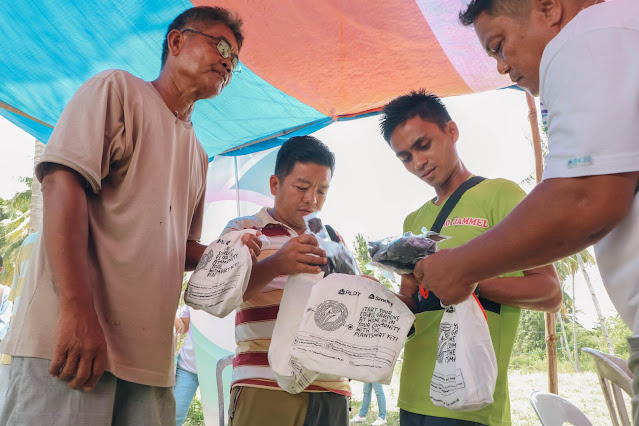
PLDT and Smart are taking substantial steps to empower communities with sustainable practices. The distribution of #PlantSmart kits is a notable initiative, providing beneficiaries across Visayas with easy-to-grow seeds, loam soil, and organic fertilizers. Designed to be user-friendly, these kits encourage communities, regardless of gardening experience, to adopt sustainable practices.

To further enhance sustainability, select beneficiaries are receiving rain barrels for storing rainwater, preventing flooding during torrential rains. This practice not only conserves water resources but also minimizes runoff and mitigates soil erosion. Noteworthy beneficiaries include Borongan City, Municipality of Cordova, University of Cebu Main, Banilad, and Maritime Education and Training Center campuses, DepEd Cebu City Division, and Sipaway Ecotourism Workers Association in Negros Occidental.

Boosting Livelihood and Tourism with Boat Donations

Palina Greenbelt Ecopark

PSF is contributing to the livelihood and tourism sectors by donating non-motorized boats to the Palina Greenbelt Ecopark in Roxas City. Apart from stimulating the local economy, these boats promote environmental sustainability by minimizing pollution and reducing the environmental impact associated with traditional gasoline-powered boats. In addition, 100 life vests and Smart pocket WiFi devices with load have been provided to ensure the safety and connectivity of Palina’s tourism workers and visitors.

Illuminating Siargao Island with Solar-Powered Street Lamps

In Siargao Island, PLDT and Smart are illuminating the way to recovery. Donation of solar-powered street lamps to the Local Government of General Luna, particularly along the Catangnan Bridge, aims to enhance safety for both residents and tourists. This initiative, catalyzed by the aftermath of Super Typhoon Odette in 2021, is expected to boost tourism and catalyze economic activities on the island.

Aligning with Sustainable Development Goals

These commendable initiatives align with the Group's commitment to achieving the United Nations Sustainable Development Goals (SDGs), with a particular focus on SDG No. 11: Sustainable Cities and Communities. By fostering sustainability, PLDT, Smart, and PSF are not only providing tangible support to the communities they serve but are also actively contributing to the broader global goals of creating a more sustainable and interconnected world.


The PLDT Group's advocacy for sustainable gifting goes beyond mere technology, reflecting a deep-seated commitment to fostering positive change in Visayas and Mindanao. Through these thoughtful initiatives, the Group is sowing the seeds of a brighter and more sustainable future for all.
Read More

Coca-Cola Philippines' Environmental Sustainability Milestones in 2023 and Beyond

Friday, December 29


As 2023 draws to a close, Coca-Cola Philippines proudly reflects on the significant strides it has made in the realm of environmental sustainability. The beverage giant not only reinforced its commitment to a "World Without Waste" but also unveiled ambitious plans for 2024. 

Strengthening Commitment to World Without Waste Targets

In 2023, Coca-Cola Philippines intensified its efforts to meet the World Without Waste targets. The launch of "May Ikabobote Pa," a brand-led initiative, showcased the company's dedication to inspiring behavioral change among consumers regarding recycling. This initiative encompasses partnerships with organizations advocating for a circular economy for plastic packaging.

Circular Economy for Plastic Packaging

A noteworthy step towards a circular economy involved the introduction of bottles made from 100% recycled PET plastic (rPET). Coca-Cola Philippines expanded its rPET packaging to include various products, emphasizing its commitment to sustainable packaging practices. The "May Ikabobote Pa" initiative, complemented by rPET labels, encourages consumers to recycle by featuring a call to action and a QR code linking to the Coca-Cola Sustainability Hub.

World Without Waste

Consumer Engagement and Recycling Programs

"May Ikabobote Pa" not only educates consumers about recycling but also enhances their experience through digital-led communications and partnerships with outlets like 7-Eleven and Shel. The Coca-Cola Sustainability Hub provides valuable information, including the locations of over 2,800 recycling drop-off points across the country, fostering a sense of community engagement.

Leveraging Partnerships for Effective Waste Management

Since aligning with The Coca-Cola Company's World Without Waste global strategy in 2018, Coca-Cola Philippines has actively formed alliances with the government, NGOs, and civil society. The goal is to make recycling more accessible by expanding recycling drop-off points and engaging micro-entrepreneurs through programs like Tapon to Ipon and Tindahan Extra Mile Balik PET Bottle.

For 2024, the company aims to expand its partner network to 2,400 carinderias and sari-sari stores in Metro Manila. Coca-Cola Beverages Philippines has also inaugurated Tapon to Ipon store hubs in 170 cities, promoting economic empowerment and a community-backed circular economy for plastic packaging.

Supporting Informal Waste Sector Workers

Coca-Cola Philippines collaborates with social entrepreneur Plastic Bank to improve the welfare of informal waste sector workers. The partnership has activated numerous waste collection locations and community members, resulting in the collection of a substantial amount of post-consumer bottles for recycling.

Preserving Water Resources

Recognizing the global impact of climate change on water resources, Coca-Cola Philippines is dedicated to water security initiatives. The company focuses on efficient water use in manufacturing, improving watershed health, and aiding communities in accessing safe and clean water.

Coca-Cola Beverages Philippines has significantly improved its national water use efficiency, saving approximately 11 million cubic meters of water from 2015 to 2022. The Coca-Cola Foundation Philippines prioritizes nature-based solutions, collaborating with over 25 partners to return an equivalent amount of water used in production to nature and communities. 

As Coca-Cola Philippines concludes 2023 with a myriad of achievements in environmental sustainability, its vision for 2024 remains steadfast. The company aims to continue its journey towards a "World Without Waste," expanding partnerships, engaging communities, and promoting sustainable practices. With a legacy of over a century in the Philippines, Coca-Cola remains committed to refreshing the world while making a positive and enduring impact on the environment and communities.
Read More

ASUS solidifies commitment to sustaining an incredible future, collects over one ton of recyclable waste with CORA

Saturday, October 14


ASUS culminates its partnership with the nonprofit organization CORA after a successful three-phased project that involved ASUS employees, partners, dealers, and the public in its thrust toward sustainability and reducing plastic waste.

ASUS solidifies its commitment toward an incredible, sustainable futureand its thrust toward a circular economy and collected a landmark 1.67 tons of plastic and other recyclable wastes through a series of activations in partnership with nonprofit organization Communities Organized for Resource Allocation (CORA). The ASUS x CORA sustainability campaign spanned three phases, each focusing on and involving various stakeholders for a holistic approach toward promoting eco-friendly products, reducing waste, intensifying awareness about circular economy and climate action, and educating people on how to lead an eco-conscious lifestyle.

“At ASUS, we believe that innovation and sustainability go hand in hand. As we continue innovating our products, we strive to be more sustainable. We are immensely thankful for everyone, including our partner CORA, the ASUS Philippines employees, our partners, dealers, and all the Filipinos who helped us in this meaningful mission to protect and save our environment through recycling plastic and other everyday waste, giving them a second life, and promoting a sustainable and incredible future for the people and the planet,” ASUS Philippines Country Manager George Su said.

In 2007, ASUS launched its first sustainable notebook, the ASUS Bamboo Series. It received numerous environmental certifications and accolades for its revolutionary engineering and design. Early this year, ASUS launched the most sustainable Zenbook ever, the Zenbook S 13 OLED (UX5304), underscoring the company’s 2025 Sustainability Goals and its commitment to environmental stewardship. Taking a significant step toward circular product design, the Zenbook S 13 OLED is an EPEAT Gold registered product with a positive environmental impact across the entire product lifecycle, from material use and manufacturing to assembly, use, and end-of-life.

Circular economy starts with us


ASUS held a knowledge-sharing activity with its employees dubbed ASUStainable Solution: Circular Economy Starts with Us. CORA and its Circular Center Women Champions (CCWC) presented the country’s current plastic situation. They educated ASUS employees on how they can contribute to a circular economy by recycling typical household wastes, such as plastic bottles. Aside from instilling personal change, the workshop encouraged employees to disseminate what they learned to their family and friends. After the seminar, a two-month recycling activity among ASUS employees was held, where they collected plastic bottles, soft plastics, sibak, colored paper, and cartons. These office and home wastes were collected through CORA’s Eco-Ikot Center pop-up, where dedicated trash bins were set up in the ASUS office. ASUS employees generated 840.6 kg. total waste. The waste collected was then brought to CORA’s partner Sentinel Upcycling Technologies to transform them into high-quality products such as benches, school chairs, and mobile trash bins.

Under the innovation and value creation pillar of the ASUS 2025 Sustainability Goals, ASUS also donated two ASUS Zenbook laptops to CORA to aid them in their administrative tasks. This includes recording data from their Eco-Ikot Center in Parañaque City and managing other programs and campaigns with public and private organizations.

The CORA Eco-Ikot Center is an inclusive and holistic recycling system that allows communities to exchange recyclables for points, which can be redeemed for various incentives. The first of its kind in the Philippines and the world, CORA’s Eco-Ikot Center provides a sustainable solution to the plastic pollution crisis.

ASUS x CORA Mall Caravan

ASUS x CORA Mall Caravan

For the second phase, ASUS installed CORA Eco-Ikot Center pop-ups in three ASUS Exclusive Stores, making it accessible for Filipinos to recycle and reduce plastic waste. Filipinos got to take home ASUS and CORA merchandise in exchange for clean and dry plastic bottles. The CCWCs educated them and other mallgoers what is circular economy and the benefits of recycling common plastic waste.

Mallgoers were also able to experience the Zenbook S 13 OLED and learned the importance of supporting and using eco-friendly products, further cementing ASUS’ sustainability thrust.

The ASUS x CORA Mall Caravan collected over 1,100 plastic bottles, equivalent to 28.5 kg. It was held at SM Cyberzone in Megamall, North EDSA, and Mall of Asia.

Celebrating International Coastal Cleanup Day

For the final leg, ASUS celebrated 2023 International Coastal Cleanup Day by combing the shore of Las Piñas-Parañaque Wetland Park (LPPWP) of trash and debris led by Zenbook S 13 OLED Ambassador and CORA Founder Antoinette Taus, together with volunteers from ASUS employees, media, influencers, partners, and dealers. This joint effort of 75 volunteers collected 646.2 kg. of plastic waste, Styrofoam, rubber materials, and stuffed toys. The trash accumulated was segregated to send the recyclable materials to CORA’s recycling partner.

The data collected during the event will help CORA and government agencies address the dire waste problem in Manila Bay. The LPPWP is part of the Manila Bay coast and was reported to carry an estimated 9.46 billion pieces of plastic waste.[i]

United Nations Goodwill Ambassador and CORA Founder Antoinette Taus also shared, “We need to reduce our waste overall and make sure that the waste we do produce ends up in the right places, to the circular economy.”

The collective efforts of ASUS Global and its local markets contributed to the significant strides in sustainability focus areas. In the recently announced ASUS 2022 Sustainability Report, the global technology leader detailed that it exceeded ENERGY STAR standards by 34%. Its eco-friendly products also accounted for 87% of total product revenue. These and more led ASUS to bag multiple 2023 Asia Sustainability Reporting Awards and receive international recognition. ASUS will continue to create local and global initiatives toward being a net-zero enterprise in 2050.


Read More

Coca-Cola Philippines launches May Ikabobote Pa consumer engagement initiative

Friday, September 8


Coca-Cola Philippines is taking another meaningful step toward a circular economy for plastic packaging by introducing more bottles made from 100% recycled PET plastic (rPET), excluding caps and labels. The rPET packaging is now available for Coca-Cola Original in 190ml and 390ml and Wilkins Pure in 500ml, in addition to Sprite 500ml, which was introduced in 2019.  


Four brands of Coca-Cola Philippines are now in packaging made from 100% recycled plastic: Coca-Cola 190ml, Coca-Cola 390ml, Wilkins 500ml, and Sprite 500ml that was introduced to the market in 2019.

Coca-Cola has launched at least one brand in bottles made from 100% rPET in more than 40 countries around the world such as Indonesia, Myanmar, and Vietnam. Coca-Cola’s rPET bottles maintain high-quality standards that consumers expect from the company and comply with local regulations as well as The Coca-Cola Company’s strict global standards for food-grade rPET packaging.  


Coca-Cola Philippines has also established over 2,800 recycling drop-off points across the country, making it more convenient for consumers to return their empty bottles. The initiative encourages consumers to join recycling efforts, helps small store owners grow their businesses, and helps prevent plastic waste from ending up where it is not supposed to be. 

Additionally, the company's collaboration with Plastic Bank Philippines has led to the activation of 38 recyclable waste collection branches in Cavite and Laguna. Since 2021, the partnership resulted in the collection of 546,000 kilograms of post-consumer bottles for recycling while also enhancing the livelihood of informal waste sector workers.  

Coca-Cola Philippines President Tony del Rosario

“Coca-Cola recognizes that the plastic waste problem in the Philippines is both urgent and complex. Therefore, it will take a collaborative effort to solve this issue. In line with our commitment to helping build a circular economy in the country, we are working to offer innovative packaging design, expand collection and recycling programs, and forge strategic alliances with stakeholders—including government agencies, industry partners, and local organizations,” Coca-Cola Philippines President Tony del Rosario said.  

“We will also use our brand power to engage consumers in collection and recycling initiatives and build awareness that used plastic bottles can have many lives,” he added.  

Coca-Cola Philippines is working to further increase the amount of recycled content used in its plastic packaging by building a sustainable pipeline of high-quality recycled material. Its bottling partner, Coca-Cola Beverages Philippines, Inc. (CCBPI), established PETValue Philippines through a joint venture with Indorama Ventures, a global leader in green technology and packaging solutions. This pioneering bottle-to-bottle recycling facility started operations in October last year and is expected to recycle 2 billion pieces of collected post-consumer PET plastic bottles per year.  

These initiatives are aligned with The Coca-Cola Company’s ambitious sustainable packaging strategy, where it aims to make 100% of its packaging recyclable globally by 2025, use at least 50% recycled plastic in its packaging by 2030, collect and recycle the equivalent of every can and bottle it sells by 2030, and bring people together to support a healthy, debris-free environment.  

CCBPI proudly shared its growing plastic bottle collection network through the strong support of its partners— “Tapon to Ipon: Basta Klaro, Panalo!” has already reached 170 cities and municipalities and is growing. CCBPI has inked partnerships with more local government units, including the Province of Iloilo, Davao del Sur, and Camiguin for large-scale collection. 

“At CCBPI, we always say that we are only as strong as the communities we serve. Everything we do builds on our promise to create a more sustainable future for Filipinos,” shared Gareth McGeown, President and CEO of Coca-Cola Beverages Philippines Inc. “We always strive to set higher standards for the industry, but more importantly for ourselves—because we know we need to do more, and you have our commitment that we will do more. We are thankful for the support of our partners in helping give our bottles many more lives." 

May Ikabobote Pa: A new consumer engagement initiative

On top of the announcement of the new Coca-Cola Original and Wilkins Pure 100% rPET bottles, the company has launched “May Ikabobote Pa”, its new consumer engagement initiative to inform and engage consumers about the actions they can take to recycle their empty plastic bottles.  

May Ikabobote Pa will be brought to life through the following activities, which are also intended to inspire action from consumers and like-minded organizations:  

New rPET labels: Coca-Cola and Wilkins Pure bottles made from 100% food-grade rPET, excluding caps and labels, now have a call to action “Recycle Me Again” message on their labels. A QR code that will lead to information about the company’s recycling program is also included on each label.  

Enhanced consumer recycling experiences: Engaging activities on recycling will be featured at Coca-Cola’s on-ground events.  

Digital-led communications for consumers: Coca-Cola Philippines will partner with groups and community leaders to co-create educational content for a wider audience and advocate for sustainable practices.  

Partnership with 7-Eleven and Shell: The company is partnering with 7-Eleven stores and Shell stations to create programs that make recycling more convenient and rewarding for consumers.  

These activities are meant to bring people together and remind consumers about the importance of recycling their empty plastic bottles because #MayIkabobotePa (Bottles Can Have Many Lives).  

Coca-Cola Philippines President Tony del Rosario announces the launch of “May Ikabobote Pa”, the company's newest consumer engagement initiative that aims to make recycling more convenient and engaging in the Philippines. Coca-Cola Philippines has more than 2,800 collection drop-off points across the country where consumers can return their empty bottles for recycling. An on-pack QR code that will lead to the Coca-Cola Sustainability Hub is also included on the labels of the new Coca-Cola bottles made from 100% recycled plastic.

From left to right: Coca-Cola Beverages Philippines Incorporated President and CEO Gareth McGeown, Sustainability Champion Andi Eigenmann, Coca-Cola Philippines President Tony del Rosario, Ms. Universe Philippines 2018 and Environment Advocate Catriona Gray, and DENR Undersecretary Juan Miguel Cuna leading the launch of “May Ikabobote Pa” consumer engagement initiative


Tapon to Reborn: Coca-Cola Philippines Employe Engagement Program
  
In line with Coca-Cola’s global commitment to sustainability, Coca-Cola Philippines has launched an employee engagement program, “Tapon to Reborn”, to encourage and enable its employees nationwide to become active participants in helping address the plastic waste problem in the country.   

“Tapon to Reborn” encourages employees to collect, segregate, and bring their empty PET bottles, cans, and beverage cartons to the office for recycling. The bottles are then sent to partner recycling facilities, including the CCBPI-supported PETValue PET bottle recycling plant, where they can become new bottles.   

The initiative aims to collect and sell 500 kilograms of PET bottles and cans. The proceeds of the collection will be used to support reforestation efforts in the Lagadlarin Mangrove Forest and Sierra Madre Forest.  

For more information on the sustainability initiatives of Coca-Cola Philippines, visit the Coca-Cola Sustainability Hub at coca-cola.com/ph/en/brands/coca-cola/sustainability or follow the company’s social media channels: @CocaColaPhilippines on Facebook and @cocacolaph on Twitter and Instagram 

Read More

Advancing circular economy on recyclable plastics through community-based efforts

Monday, July 24

 Roberto Papagayo

Three years ago, Coca-Cola Philippines and Plastic Bank Philippines made a pact to support a circular economy in the Philippines by creating the Ecosystem Impact Program, an initiative that builds collection and recycling systems in communities to prevent plastic bottles from ending up in places where they should not be—including our rivers, oceans, and landfills—while at the same time, empowering workers in the solid waste management sector.

Since then, their efforts have resulted in the collection of more than 8.7 million bottles for recycling and the activation of 33 waste collection centers across Cavite and Laguna, many of which are located in coastal communities. Through the support of Coca-Cola Philippines, the Plastic Bank ecosystem now has 600 waste collection members, equipped with tools and equipment for efficient waste collection, financial and business literacy, operations management, and health and sanitation.

The partnership is aligned with The Coca-Cola Company’s World Without Waste global sustainable packaging strategy, whereby the company aims to make 100% of its packaging recyclable globally by 2025, use at least 50% recycled plastic in its packaging by 2030, help collect the equivalent of every can and bottle it sells by 2030, and bring people together to support a healthy, debris-free environment.

Empowering waste collectors as ocean defenders

Coca-Cola Philippines recognizes the role that waste collection locations play as part of the “backbone” of solid waste management in the country. “Through these high-profile waste collection locations, many consumers are encouraged to segregate their waste and recycle,” said Atty. Cashmer Dirampaten, Public Affairs, Communications, and Sustainability Director, East Region of Coca-Cola ASEAN & South Pacific East Operating Unit. “They encourage consumers to bring recyclable plastic bottles to waste collection locations so those can be reused, instead of being thrown away and ending up in places where they should not be.”

Guido Sarreal, Plastic Bank Regional HR Business Partner for the Asia-Pacific Region, acknowledges Coca-Cola Philippines for its continuous support to the Plastic Bank Ecosystem and its waste collection members. “We are very honored and privileged to have an organization like Coca-Cola Philippines that is sincere in their efforts in helping drive a circular economy for plastic packaging, and in helping our partners and collectors increase their capacity, capability, and ability to thrive and to support their families,” Sarreal said.

Sarreal emphasized that Plastic Bank has found a real partner in Coca-Cola Philippines as they share a common goal to prevent plastics from reaching the ocean and uplift the lives of people who collect them. “We call waste pickers and collectors “frontliners” because they are among the first lines of defense that protect our oceans from plastic waste.”

Helping waste collectors grow their businesses

In Santa Rosa, Laguna, Roberto Papagayo, owner of Papagayo Junkshop, started his business in 2005. He got the idea of entering the waste collection business from his father-in-law, a bottle picker. Their family saw significant economic value in waste collection and built their enterprise with only Php 3,000 as capital. Their business started booming within the first year and like any other business, they aspired to continue to grow, which led them to join the Ecosystem Impact Program. 

In just six months of partnership, Papagayo Junkshop saw an increase in profit, thanks to the Plastic Bank App that helps users–waste collectors and pickers–earn rewards for bottles collected and recycled, monitor plastic collection and recycling processes, deliver plastic credit programs, and produce audit-ready impact reporting.

“Naging masipag ang mga magbobote namin sa pagbebenta dahil mayroon silang natatanggap na incentives. Dahil dito, mas dumadami ang nakokolektang bote at mas lumalaki ang kita (We noticed that our waste pickers have become more hardworking and reliable partly because of the incentives they get from the program, resulting in increased plastic bottle collection and sales),” Papagayo said. Aside from incentives, the program also provides tools, equipment, and training for waste collectors and pickers to help them become more efficient and productive.

Papagayo added that the partnership made their business more visible in their community. “Proud ako na maging member ng Coca-Cola Philippines at Plastic Bank Ecosystem (I am proud to be a member of Coca-Cola Philippines and Plastic Bank’s ecosystem). Kapag nakikita ito ng mga tao, nahihikayat silang magbenta sa amin (People who learn about that become more eager to do business with us).”


The Llabres Junkshop in Laguna is also pleased with its decision to join the program because of the benefits to their business, particularly in streamlining operations. Katherine Llabres and her husband, Joel Llabres, have been running their business for 10 years. They joined the Ecosystem Impact Program in May 2022. 

“Natutulungan ako ng program na i-monitor ang dami ng plastic bottles na nakolekta namin at kung puwede na ba itong ibenta sa recycling facilities (The program helps me monitor the volume of plastic bottles collected and determine if it is large enough to be sold to recycling facilities),” Llabres said.

“Dati, hindi ko agad nalalaman kung gaano na karami ang nakolekta, nakatambak lang. Pero ngayon, mas madali na mag-monitor ng transactions (I used to be confused and overwhelmed by the quantity of waste collected. But now, recording and monitoring transactions have become easier).”
Llabres also noticed that their site became cleaner and more organized through the help of the Ecosystem Impact Program. “Binigyan nila kami ng jumbo bags para doon ilagay mga nakolektang bote, para hindi nakakalat (They gave us jumbo bags where we stock our collections so that they are not scattered around),” she said.

“Binigyan din nila kami ng digital na kilohan. Mas gustong magbenta sa amin ng mga tao ng kalakal mula noon kasi accurate iyong digital, hindi sila nadadaya (They also gave us a digital weighing scale that helps us bring more customers. Since the weighing scale is digital and more accurate, our customers are more confident that they will receive a fair price in exchange for the waste that they have collected).”

Inspiring collective action towards plastic circularity

Papagayo and Llabres believe that waste collection centers have an important role in keeping communities safe from various environmental and health risks. They see the active involvement of community members in waste collection and recycling as crucial in ensuring sustainability.

For Llabres, providing economic opportunities helps spark action. “Sinasabihan ko sila na linisin na nila ang mga bote at tanggalan na ng label para mas malaki ang makuha nila pag ibinenta (I advise waste pickers and collectors to wash the plastic bottles and remove the labels before selling them to me so they can earn more money),” she said. “Dahil kumikita sila sa pangangalakal, naglilinis na sila ng paligid nila. Kaysa naman iba ang ginagawa, namumulot na lang ng sila ng mga bote, maiibenta pa nila (Because they earn from segregating waste, many of our residents are encouraged to clean their surroundings. They realize that it is a more productive use of their time).”

Papagayo does the same thing. “Sinasabihan ko ang mga nakakausap ko na kaysa itambak o itapon mga gamit nila, ibenta na lang nila sa akin (I promote waste segregation by telling people to sell things that can be recycled instead of discarding them),” he said.

“Nakatira kami sa coastal community malapit sa Laguna de Bay. Maraming plastic doon lalo na kapag umuulan at bumabaha. Iyong mga basura, sa halip na nakatambak doon, kinukuha ng mga nakatira doon at ibinebenta sa amin, lalo na ‘yung plastic bottles. Kumikita na sila, nalilinis pa ‘yung dagat (We live in a coastal community near Laguna de Bay. We find many plastics there, especially when it rains and floods. Residents prevent waste from accumulating in our shores and waters by collecting and selling them to us. We all earn while protecting our oceans).”

According to Sarreal, the Plastic Bank Ecosystem collected 200 metric tons of plastic waste in 2022, and they aim to double the number this year. He emphasized that collective participation driven by positive behavior change helps them achieve these goals.

“When you hear waste collectors and pickers talk about how they are part of stopping ocean plastic, that’s a mindset change. From only seeing the waste collection as an income source to believing that they are part of the solution against the plastic problem shows great promise,” he said.

For 2023, Coca-Cola Philippines aims to further expand its over 2,000 community-backed collection hubs nationwide and strengthen collaborations with communities and like-minded organizations all over the Philippines.
Read More
...