healthcare
Showing posts with label healthcare. Show all posts

Probiotic and Prebiotic in Infant Nutrition Supports Babies Health Revealed in New Scientific Evidence

Thursday, March 29


We all know that the mother's breast milk is the best source of nutrition for newborns and infants. If possible, exclusive breastfeeding is recommended within the first hour after birth up to six months of age. Breastfeeding complemented with solid foods can be continued up to two years or beyond.

Studies about the nutritional composition and benefits of breast milk never stops. In a recent round table discussion I attended at Holiday Inn Makati, Dr. Eduardo Lopez-Huertas from the Spanish Council for Scientific Research (CSIC) shared with us new scientific evidence regarding the combination of probiotic and prebiotic in infant nutrition and how it supports the health of the babies.


Recent studies published in the Journal of Pediatric Gastroenterology and Nutrition & Pharmacological Research reveal that a combination of the probiotic lactobacillus fermentum and prebiotic galacto-oligosaccharides (GOS) given to babies over a six-month period significantly reduced the rate of gastrointestinal and respiratory infection in babies between 6-12 months of age. In addition, it was demonstrated that l.fermentum was safe and well tolerated in babies from 1-12 months of age. As a secondary outcome, the consumption of the combination of l.fermentum and GOS improved the health of infants (1-6 months) by reducing the incidence of gastrointestinal infections by 71%. 

Breastmilk is the gold standard in infant nutrition and exclusive breastfeeding is the recommended way of feeding infants. The new study shows that, if breastfeeding is not possible due to the mother’s condition, infant nutrition may be an alternative. Breastmilk contains lactic acid bacteria like bifidobacteria and lactobacillus, including l.fermentum, and prebiotics containing galactose. The administration of l.fermentum in infant nutrition to babies between 6-12 months of age produced reductions of gastrointestinal infections (46%) and reductions of upper respiratory infections (27%) such as common cold, pharyngitis, tonsillitis. 

Combination support of probiotic l.fermentum & GOS and CS born-babies 


During birth, bacteria, including probiotics, are transferred from mother to baby as it passes through the vaginal canal. The presence of good bacteria in the gastrointestinal tract protects the baby from diseases and infections. 

Women who deliver babies by CS are less likely to breastfeed or delay breastfeeding initiation. It has been shown that CS-born babies possess less beneficial bacteria and more potentially pathogenic bacteria in the gut. This increases the risk of diseases later on in life like asthma or atopic dermatitis. For CS-born babies who cannot be breastfed, infant nutrition containing a combination of l.fermentum and GOS may be considered. 

“For babies who cannot be breastfed, the combination of the breastmilk probiotic l.fermentum and the prebiotic GOS in infant nutrition presents advantages regarding community-acquired infections mainly gastrointestinal infections. In addition, for babies born by CS who cannot be breastfed a formula with pre and probiotics should be considered due to its possible benefits,” said Dr. Eduardo Lopez-Huertas, a research scientist and author of published clinical researches on babies’ nutrition and health.

Read More

What You Need To Know To Beat Colorectal Cancer

Saturday, March 3


Did you know that colorectal cancer ranks 3rd in the Philippines? Lung cancer, breast cancer are the top two cancers while liver cancer takes the fourth spot. The Medical City's Colorectal Clinic and the Cancer Institute is takes an active role in its advocacy to increase the Filipinos awareness and beat colorectal cancer (CRC). In celebration of Colorectal Cancer Awareness Month, a symposium was held last March 2 and I was fortunate to be invited again. I am sharing with you what you need to know about colorectal cancer and what you can do to beat it.

What is colorectal cancer? 

Colon cancer is the cancer affecting the large intestine (colon), which is the lower part of the digestive system. Rectal cancer is the cancer affecting the last 12 centimeters of the colon. Together, they are referred to as colorectal cancer.

Most cases of colon cancer begin as small, non-cancerous clumps of cells called adenomatous polyps. Some of these polyps may become cancer. These polyps may sometimes not show any symptoms.

FACT: A polyp may take about 10 years to develop into cancer.

Who are at risk of colorectal cancer?


  • 90 percent of people diagnosed with colon cancer are older than 50 years.
  • family history of colorectal cancer 
  • personal history of CRC or advanced polyps
  • pre-existing diseases involving long-term inflammation of the colon
  • lifestyle factors such as diet associated with low in fiber and high in fat, calories, red meat and processed food
  • diabetes
  • obesity and sedentary lifestyle
  • smoking 
  • alcohol intake

Why should you get screened for colorectal cancer?

Many cases of colorectal cancer do not manifest any symptoms. That is why it is highly recommended for people who are 50 years old and those who are high risk to undergo screening. The earlier the cancer is detected, the higher the chance to beat colorectal cancer.

With proper screening, colon cancer can be detected BEFORE the development of symptoms, when it is most curable.

How does one know if one has colon cancer?

  • recent changes in bowel habits, such as diarrhea or constipation
  • blood in the stool
  • persistent abdominal discomfort, such as cramps, gas or pain
  • abdominal pain with a bowel movement
  • a feeling that your bowel doesn't empty completely
  • unexplained anemia
  • weakness or fatigue
  • weight loss with no known reason
  • narrow or thin stool

What are the screening methods available?

  1. Fecal Immunochemical Test (FIT) yearly. If positive, a colonoscopy is required.
  2. Colonoscopy every 10 years
  3. Fecal Occult Blood Test (FOBT) yearly with flexible sigmoidoscopy every three years
  4. Virtual CT Colography every three to five years

How much does colonoscopy cost?

Colonoscopy at The Medical City costs around 20,000 pesos. 

For more information, call Colorectal Clinic at (632) 988-7000 local 7789


Read More

How To Be A Philhealth Sponsored Member

Tuesday, January 9


Every first week of January, I make sure that I have paid my annual Philhealth contribution. Eversince I left my corporate work, I changed my membership status from Formal Economy to Informal Economy (voluntary) member to continue my coverage. It is sad that many Filipinos do not see the importance of a Philhealth insurance membership. Getting sick is very expensive and Philhealth helps in subsidizing the medical costs. For voluntary members, the contribution is only 200 pesos a month. 

Every Filipino with a mobile phone who can afford to buy a cellphone load 
can definitely afford the Philhealth monthly contribution.

Philhealth is a health insurance program that provides health insurance coverage for citizens of the Philippines who are members. There are seven types of membership: Formal Economy Members, Informal Economy Members, Indigent Members, Sponsored Members, Overseas Filipinos Members, Senior Citizen Members, and Lifetime Members. I'll be writing a series of articles to discuss the different memberships available in order to encourage Filipinos to become a member. For this article, I'll be sharing with you guidelines on how to be a Philhealth Sponsored Member.

What is a Philhealth sponsored member?

A Philhealth Sponsored Member is a member whose monthly contribution is being paid for by another individual. He can also be sponsored by a government agency or a private entity. 

image: Pixabay

Who are qualified? (source: Philhealth)

  • Members of the informal economy from the lower income segment who do not qualify for full subsidy under the means test rule of the DSWD, whose premium contribution shall be subsidized by the LGUs or shall be through cost-sharing mechanisms between/among LGUs, and/or legislative sponsors, and/or other sponsors and/or the member, including the National Government;
  • Orphans, abandoned (children who have no known family willing and capable to take care of them and are under the care of the DSWD, orphanages, churches and other institutions) and abused minors, out-of-school youths, street children, persons with disability (PWD), senior citizens and battered women under the care of the DSWD, or any of its accredited institutions run by NGOs or any non-profit private organizations, whose premium contributions shall be paid for by the DSWD;
  • Barangay health workers, nutrition scholars, barangay tanods, and other barangay workers and volunteers, whose premium contributions shall be fully borne by the LGUs concerned; and
  •  Un-enrolled women who are about to give birth, whose premium contributions shall be fully borne by the National Government and/or LGUs and/or legislative sponsors or the DSWD if such woman is an indigent as determined by it through the means test.

If you wish to sponsor someone or if you know someone who is qualified to be sponsored by a government agency or a private entity, encourage that person to visit the nearest Philhealth Office and secure a copy of the Philhealth Member Registration Form. You can also download the form HERE.

For more information, visit www.philhealth.gov.ph or you may call (+632) 441-7442


Read More

How Software Advances are Making Scheduling Easier for Doctors

Friday, November 24


Technology has had an impact in every industry out there but nowhere is that more evident, and more vital than in the healthcare industry. Technology has made it possible to diagnose, treat, and follow up with patients easier and more accurately than ever before. Take a look at how doctors go about scheduling their appointments, surgeries, consultations, etc. 

Today there is technology that is not only making it easier for these doctors, but can also save lives by making sure there is no delay in getting the information to the healthcare professional. Here’s a closer look at how software advances are making scheduling easier for doctors.

Reach the Right Physician

One of the most important aspects of scheduling an appointment or getting a message to a specific doctor is that it needs to reach the right physician. Information that is sent to the wrong email address or phone number is going to result in zero results. When it comes to patients in critical condition, this could mean the difference between life and death.

Information is Easily Accessible from Anywhere

There is also the fact that the scheduling information needs to be available not just to the physician but also the administrative staff. The ideal software allows the doctor, and anyone who has been granted access, the ability to log on, view the schedule anytime they want, and from any place. It provides flexibility that allows doctors to react fast and in real-time.

Get Critical Messages to the Doctor Faster

Speaking of acting in real-time, this type of software also makes it possible for doctors to get critical messages faster and without delay. Again, it goes back to those life and death moments where reaching the doctor immediately is of the utmost importance. 

Allows for Last-Minute Changes - is Dynamic

The healthcare industry is one that is always on the go, always busy, and always changing. What this means is that the doctors need software that is dynamic and can keep up with last minute changes and on-call scheduling. Software that has been created specifically for scheduling needs can handle these issues without problem, allowing changes to be made in the moment. 

One of the Most Important Aspects in the Day

Scheduling appointments is in fact one of the most important aspects in a doctor's day. They need to be sure they are fitting all the necessary patients in, leaving enough time for each, and acting in a quick and efficient manner in those emergency situations. Effective scheduling software should include a calendar and scheduling tool, run smoothly and quickly, be easy to use, and provide access on the go to all of those who have been granted access.

There may even be an internal messaging system that makes it possible for staff to communicate with each other in real-time through the program itself. Again, this just provides greater transparency and access to information. The goal should be to provide seamless appointment scheduling for all, so that the patient’s needs are always a priority.


Read More

Personalized Cancer Care: Gaining Advantage Against Cancer

Thursday, November 16


I still remember the day when my mom complained of pain in her abdomen. I convinced her that we should consult a doctor. I suspected something was seriously wrong. She had Stage 2B breast cancer and was declared "cancer-free" after undergoing surgery and chemotherapy. Eight years later, she was diagnosed with Stage 4 liver cancer.


When I asked my mom's oncologist what happened considering my mom was regularly monitored, she explained that while a cancer patient is in remission, the cancer will stay in other organs (organ depositor) like the liver, lungs, brain, or bones and stays dormant. Remission means a diminution of the seriousness or intensity of disease or pain; a temporary recovery.

According to Dr. Ioannis Papasotiriou, remission and cancer-free are two different things. It is not easy to put the label cancer-free to patients and more often than not, the term "cancer-free" is carelessly being used.


A cancer diagnosis is the most frightening news you'd hear from your doctor. While some will exhaust all means to win the battle against cancer, there are those who will fall into the pit of depression. 

What if it's possible to detect cancer in it's earlier stage and there's a better chance of managing the disease? 

There are cases where the treatment is nearly as bad as the disease itself. 

What if you can identify which therapy will deliver the best possible result through a more precise, more individualized management plan?

"There's no one-size-fits-all method to cancer 
diagnosis and treatment."


Each cancer is as unique as the person suffering from it. The Research Genetic Cancer Center (RGCC) is a world-class laboratory that specializes in medical and cancer genetics. It focuses on early detection, personalized chemosensitivity testing, and accurate monitoring. They believe that the only way for doctors to come up with an effective battle plan is to be fully knowledgeable of the cancer, at genetic level.


At RGCC, the first step in cancer therapy is isolating and indentifying Circulating Tumor Cells (CTCs). CTCs are cells that have broken away from a primary cancer site and entered the blood stream. 

Oncocount is RGCC's screening test that gives information on the presence and concentration of CTCs. These cells could potentially spread the disease even to distant organs.

Oncotrace shows the presence of CTCs, their concentration, and immunophenotype (what type of cell it is).

Oncotrail is the test tailor-made for specific types of cancers used for follow up control on old cancers. 

With the information that these tests provide, new cancers are detected and diagnosed; existing cancers are monitored; and information about the possible risk of recurrence of a current or previous cancer is provided.

Once the cancer cells have been identified and targeted, the next step is the test for chemosensitivity or chemoresistance. These tests provide guidance in deciding on the best available treatment for the patient. These tests take out the trial and error aspect in cancer treatment because the effectivity of a specific treatment is already determined. Also, the significant side effects are also known before embarking on a chemotherapy program.

Onconomics gives information on whether or not a specific drug works on the cancer cells of the patient. Oncomomics Extracts, in the meantime, shows if natural biological substances or extracts can counter cancer cells. This gives the patient the option of using natural substances as a complementary treatment strategy. Onconomics Plus is a combination of the two tests.


Emphirical chemotherapy may have a low percentage of efficacy because each person’s response to drugs can be different. Every person has a unique genetic response to cancer, depending on their genetic fingerprint. 

There are the Rapid Metabolizers, whose cells can process the drug so fast that it doesn’t have an effect on them; Accumulators, on the other hand, cannot take out the by-products of a drug so they often suffer from debilitating side effects and toxicities; and there are the Normal Metabolizers, who can normally process a drug to its active form and releases its byproducts. 

ChemoSNiP examines the inherited variations in genes that dictate drug response and explore the ways these variations can be used to predict how the patient will respond- positive, negative or non-response- to the drug. 

Meanwhile, the Immune-Frame looks for the type of cells that are responsible for the activation or repression of one’s immune system. Cells of the primary tumor may have the ability to spread to other organs. To help doctors and patients in proactive monitoring of the metastases trends, Metastat can help identify the potential organ that can be affected in the future, like the lungs, bone, liver, and brain.


The main goal of RGCC Genetic Cancer tests is to discover, analyze, and screen the cancer cells at every stage of the disease to give the patient an advantage against the fight against cancer. 

With the information from the tests, patients and their doctors are better equipped in creating a precise, effective and sustainable health management plan. Meanwhile, health and wellness facilities focused on creating health can work with the patient and physician in developing a health plan that would keep the rest of the body strong and healthy, through diet and lifestyle modification, to help prevent the spread of the cancer. The attending physician or oncologist can focus more on the cancer treatment and management plan.

The RGCC Genetic Cancer tests are made available and accessible by Global Medical Technologies (GMT). GMT has been at the forefront of making some of the most up-to-date and relevant medical technologies and diagnostics from developed countries accessible to Filipino medical practitioners and patients, and help them outsmart health issues. 

The RGCC tests can be requested through your Physician. It is exclusively distributed in the Philippines by Global Medical Technologies, for more information, patients and health practitioners may visit www.gmtmanila.com.

Read More

Maxicare Opens Primary Care Center in BGC

Saturday, October 7


Maxicare is celebrating 30 years of providing members with efficient and convenient ways of having access to their health benefits and to make it even better, the leading Health Maintenance Organization in the country has opened it's newest Primary Care Center (PCC) in Bonifacio Global City in Taguig.

Operating 24/7, the new Maxicare PCC will be able to serve Members, majority are from BPOs within the vicinity, across different shifts. It is also a more accessible way to get immediate medical attention, with better care and experience, considering the high volume of patients in hospital ERs. 


This new Maxicare PCC is equipped with complete capability of a stand-alone multi-specialty clinic.  It is a closed loop health care facility where one can book a consultation appointment with doctors and do laboratory procedure, if requested by the doctor, within the same premise.   


 It is with pride that the new PCC is equipped with state-of-the art machines to facilitate the most common procedure requested by doctors and members. Moreover, as Maxicare vouches to be more steadfast in its ‘Go Green’ campaign, the machines and technology are certified eco-friendly and will facilitate paperless processes. 


Strategically located at the W City Center in BGC, a building categorized as Class A by BOMA (Building Owners and Managers Association Internationale) and LEED-compliant, the PCC is also designed and equipped to be environment-friendly and to reduce our carbon footprint. This reflects Maxicare’s commitment to sustainability and serving its members for future generations. . Not yet a Maxicare Member? A service card, depending on one’s medical need such as consult only, is available for purchase at the PCC. 


The new Maxicare Primary Care Center is now ready to serve you. Visit the PCC at the Ground Floor of W City Center, 7th Avenue corner 30th Street, BGC, Taguig City. You may also call (02) 908.6957 for any inquiries or appointment.   

Other Maxicare PCCs are located at the following: 

Cardinal Santos Medical Center
Centuria Medical Makati
Chinese General Hospital
Lipa City Batangas, 
Makati Medical Center, 
MyHealth Makati
St. Luke’s Medical Center – BGC & Quezon City 
The Medical City

Visit www.maxicare.com.ph, or the social media accounts listed below, to know more about the products and services of the leading Health Maintenance Organization (HMO) in the country. 

Facebook: /maxicarehealthcarecorp 
Instagram: @maxicarehealthcare 
Twitter: @MaxicareHMO 
Youtube: Maxicare Healthcare Corporation 


Read More

Medgate Philippines: Doctor Consultation Without Leaving Your Home

Thursday, August 17


Whenever I feel sick, I just want to stay comfy in my bed. The thought of going to the doctor's clinic and waiting in line for a consultation is dreadful for me. Most of the time, I am guilty of consulting google and self-medicating. Bad. I don't recommend that.

BUT

Is it possible to seek professional medical help without leaving your home?  The answer is YES. 

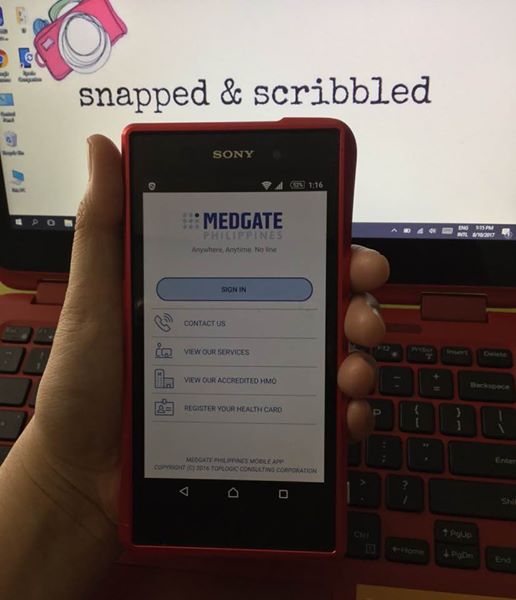
I was invited by Medgate Philippines to visit their office in Makati and I learned about their world-class telemedicine healthcare service. Medgate is the leading international provider of telemedicine, with operations in Switzerland, the Middle East, Australia and the Philippines. Although their operation in the country started only last year, the healthcare system has been developed four decades ago and continues to improve through technological advances.

How does it work?

The consultation is done via phone call, through Medgate's mobile app or website. A nurse receptionist will gather important details regarding your medical concern and will then forward your information to the doctor who can provide accurate diagnostic. You can also opt for a video chat if you are using the app. Once the medical team has assessed your condition, the doctor will advise you if you need further assessment such as laboratory tests, x-ray, etc. Request for these procedure will be sent via email. The doctor can also give prescription for medicine, if necessary.


If ever you are wondering if the doctor you are talking to is really there in the telemedicine center, definitely! During my visit, I got to meet and talk to one of their pediatricians. 

So I won't be leaving home for consultation, but how about my medicines?

Medgate Philippines wants everything to be hassle-free. They partnered with MedExpress if you opt to have your medicines delivered to your doorstep. 

Do I need to queue in the hospital for my laboratory?

If you are using your Medgate accredited HMO, you will be issued a pre-approved laboratory procedure request sent to your email. No need to line up for approval.

What are the accredited HMO providers?

  • Intellicare
  • Avega
  • Cocolife
  • Insular Healthcare
  • HPPI
  • Generali Life Assurance Philippines, Inc.

I don't have HMO. Can I still avail of the service?


You can buy a Medgate Access Card to avail of unlimited consultations during the validity of the card.

What if I don't have a landline. Calling up using my mobile phone is expensive.

Don't worry. You can simply text: 0917-536-2156 (Globe), 0998-990-7540 (Smart), and 0925-714-7794 (Sun) and the Medgate receptionist will call you back.


Isn't this the most convenient way to get well?

For more details, visit http://medgatephilippines.com/

Read More

Aster Clinic is first outpatient clinic in the Philippines awarded with an ISO 9001:2015

Sunday, January 15


Aster Clinic marks a milestone as the first outpatient clinic in the country to receive an ISO 9001:2015 certification from the reputable German company TUV Rheinland. 

Coincidentally awarded at the turn of 30th global anniversary of its parent company, Aster DM Healthcare LLC based in UAE, Joyce Alumno, Country Manager of Aster DM Healthcare Philippines, identified the company’s unwavering core values, world-class standards, excellent patient experience, and technological advances in patient care as the advantages that awarded them the newest quality management system certification. 

The ISO 9001:2015 is the most difficult certification process so far and TUV Rheinland is one of the most reputable certification firms that awards such. The newest certification requires a holistic, rigid procedure as it looks into how a company manages potential risks, aside from conforming to international standards and other crucial criteria for assessment. 

“It was not easy to pass the 9001:2015 commendations. We had to go through a tough process, which required us to document everything. However, with our existing international standards, we were given the TUV Rheinland approval after six months. Usually, assessments can go up to two years,” Alumno said. 

World-class standards as guiding principles for superiority Alumno said that Aster Clinic is guided by standards that have been around for 30 years. “Aster DM Healthcare established a certain level of quality as benchmarks for about 300 Aster units located around the globe. We are guided by six core values, including integrity, passion, respect, compassion, excellence and unity that we have ingrained in our system and culture since we started operating.” 

Although Aster Clinic is just one year old in the country, its foundation is based on the standards set by their international counterparts in different parts in the world. Excellence and as a core value of the trusted brand Among Aster Clinic’s core values, excellence is given emphasis as it highlights the quality and superiority of the company in patient care. 

“Excellence is our most important norm. As we aim to give the best service to our customers, we continue to improve our standards. We set the benchmarks and we further raise it. Our goal is to continuously develop as a global company and that Quality is a culture in Aster and the company puts a premium on service as this is what Aster DM Healthcare is known for. Technological advances in patient care “We’ll treat you well.” 

This is the proposition of Aster Clinic in the Philippines. But, more than just a marketing tagline, Aster Clinic has added more value to its goal of treating its patients well by introducing best practices that uses technology. The Clinic Information System (CIS) and Electronic Medical Records (EMR) are technological breakthroughs in the company that have been recognized for its efficiency to patient care. The CIS and EMR are systems for recording and keeping patients’ health information like laboratory results, medical check-up appointments, and even x-ray images. The information can be tracked by patients through the internet or their smartphones, which saves time, effort and costs on the part of the patients. The doctors can quickly refer to the patients’ records. 

“We have top-of-the-line machines and equipment to back this modern system. The technology is created by the Aster group and is unique to the company. These technologies help eliminate errors and the switching of results. It is proven and tested to be efficient and effective,” Alumno said. 

Aster Philippines looks into more opportunities “The ISO 9001:2015 certification is not just a marketing strategy for Aster Clinic. The company wants to make sure that they are setting the bar for international standards for outpatient clinics, thus we deemed it necessary to be certified by none less than TUV Rheinland. Our greatest goal is to gain customer satisfaction through our excellent services. Through the ISO certification, we are confident that we will deliver the best satisfaction that our patients would like to experience,” Alumno emphasized. 

Meanwhile, the company is planning to expand in the country and will open three more branches in February next year. “We want to become a chain of outpatient clinics while we look for opportunities of building hospitals and pharmacies because that’s what we have within our network. If the market is good, we are planning to do this in Metro Manila and in some key cities in the country” Alumno said. Alumno added that the company will continue to promote its services, especially among the young adults as they recognize the increase of chronic or lifestyle diseases among this age group. 

With an ISO 9001:2015 certification on its company wall, Aster Clinic in the Philippines is hopeful that these plans will be part of the future.

Read More
...